Jugend forscht
Jugend forscht is an annual youth science competition in Germany. You work on a project in your spare time, typically supported by your school or special student labs. Then you present that project at your local, state, and later even countrywide competition, where it will get graded by an academic jury.
What we did
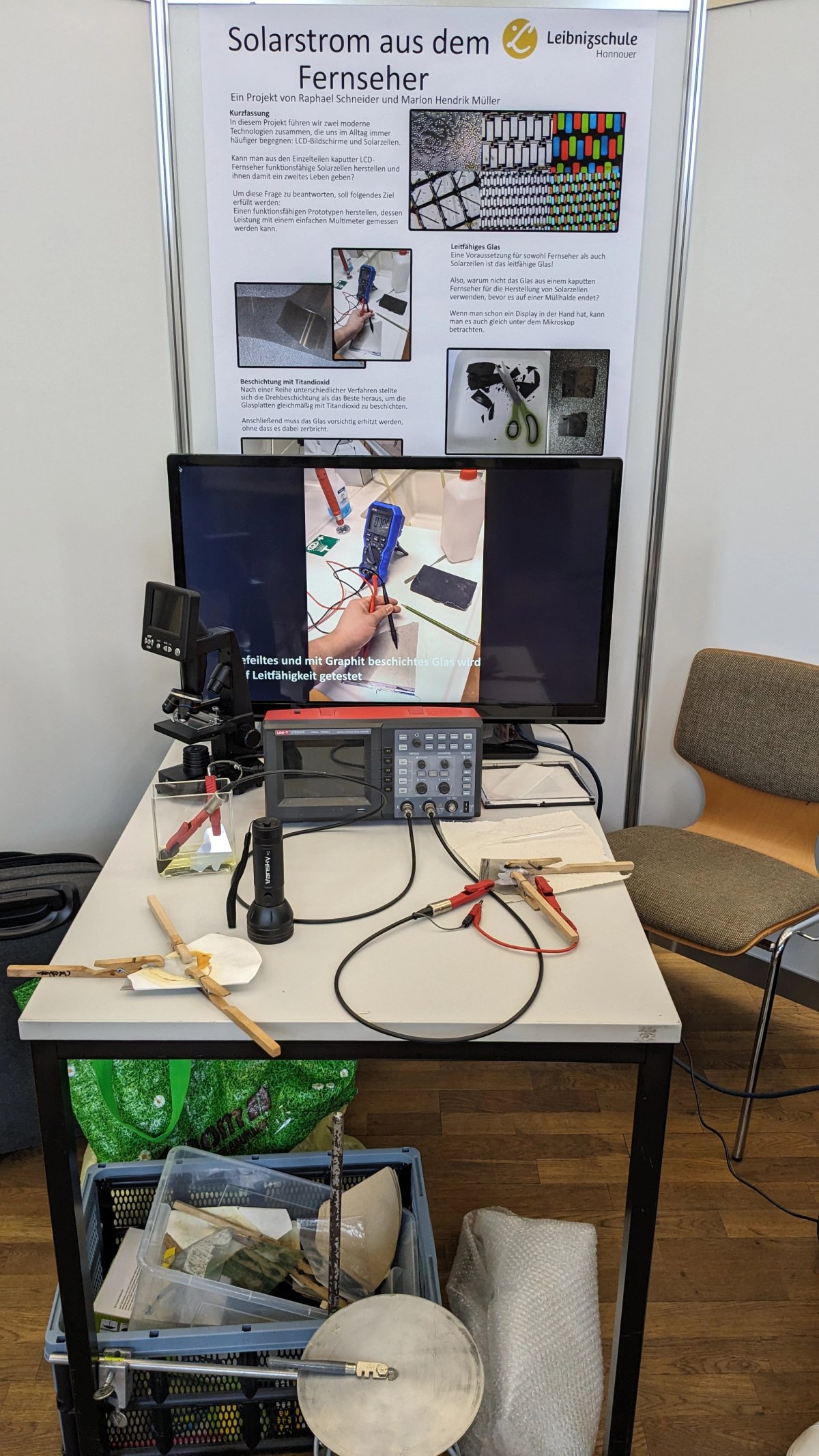
Photeia was a project I worked on together with a fellow student during my last year in German high school. We were at that time interested in the physics of solar panels and new developments in that field, specifically the possibility of integrating transparent or semi-transparent solar cells seamlessly into glass windows. This technology could massively increase the potential solar area to be used, especially in cities, and reduce construction costs compared to additional panels that are mounted externally on building roofs.
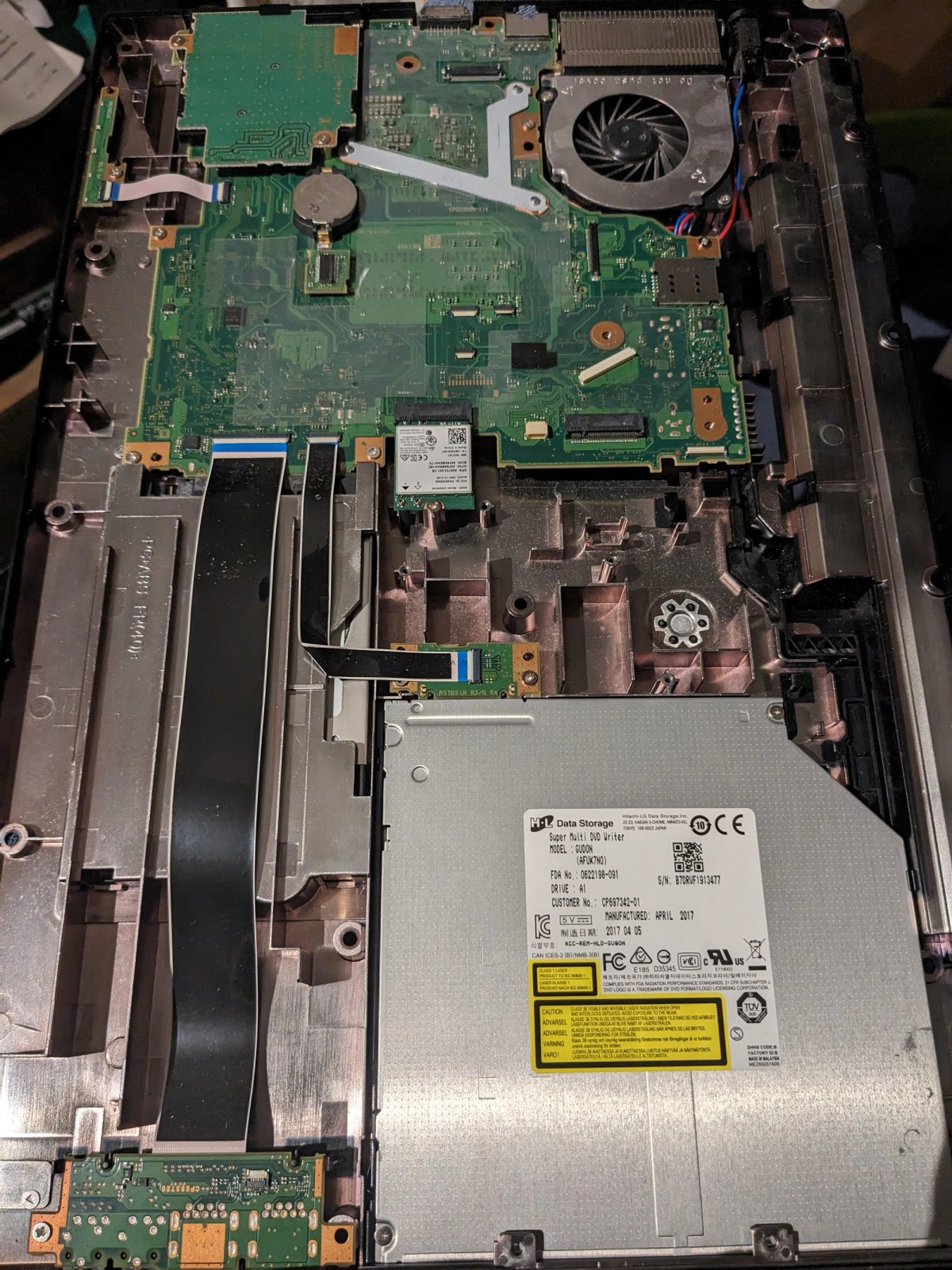
As things happen to sometimes just work out randomly, I had a recently broken TV at home and we had made an interesting observation when looking for different approaches to organic solar cells. Specifically, the coating of LCD screen glass (Indium Tin Oxide) is one of the most expensive components in modern solar cell production. So we set out to experiment with the glass at hand and find out whether the glass of such a screen could be used to build a working panel.
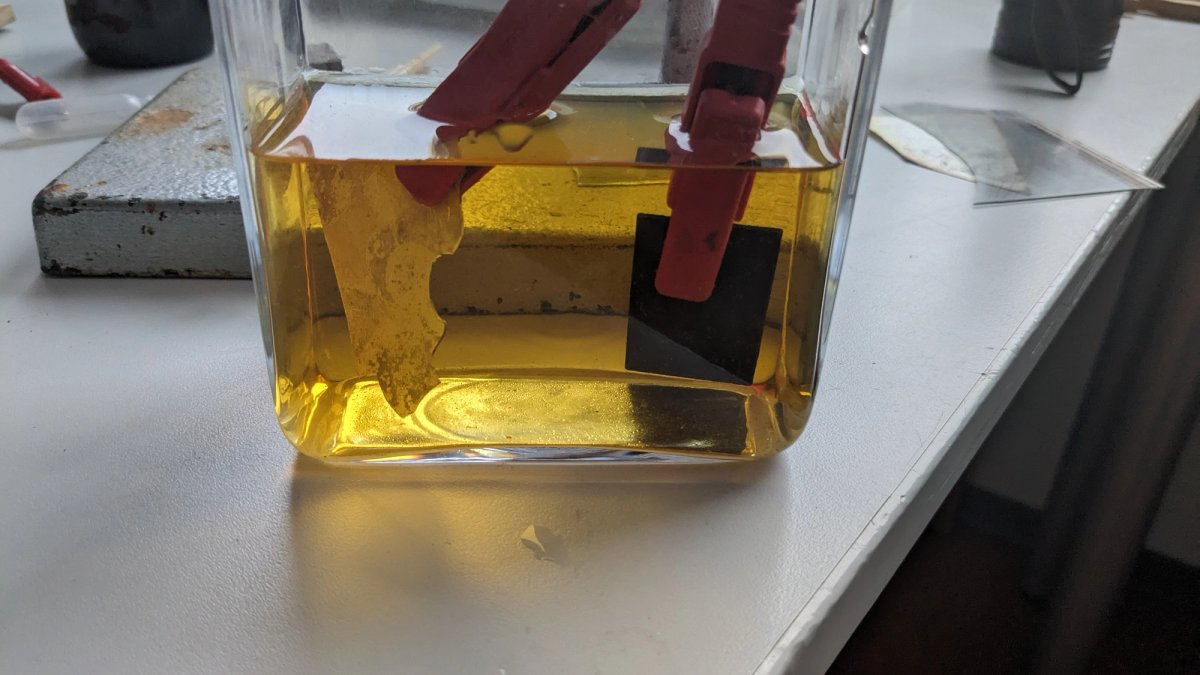
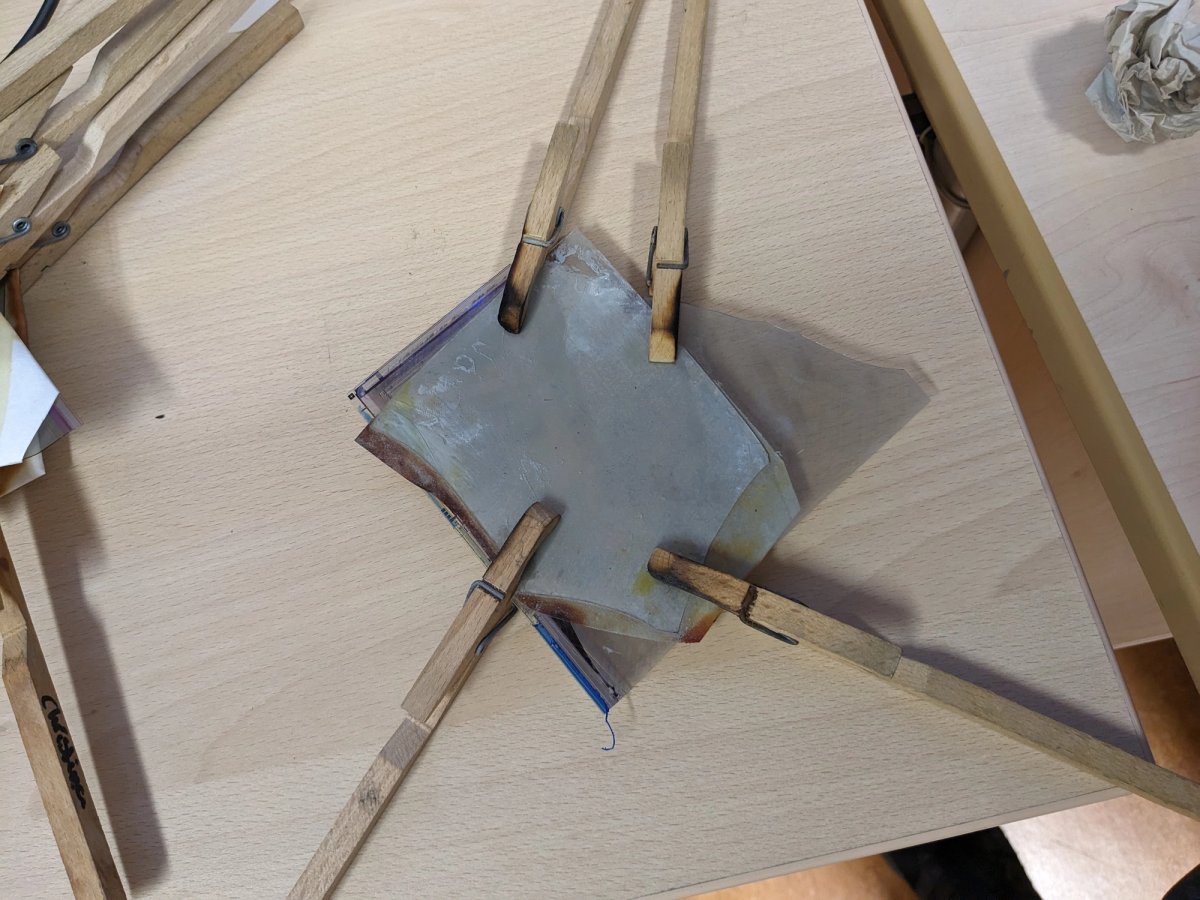
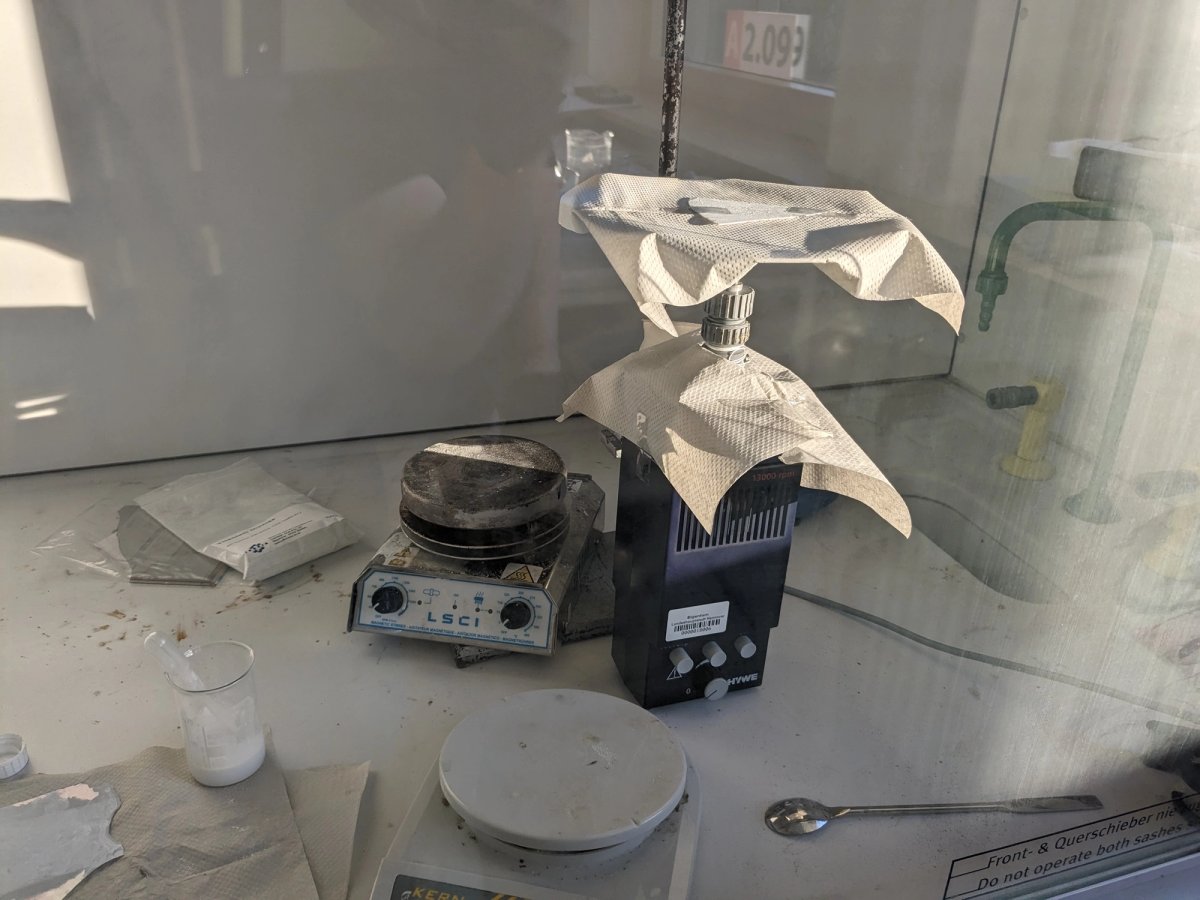
Easier said than done, we set out to work on the project. While glass extraction from the screen itself turned out to be easy, later attempts to cut it were plagued by a lot of problems. I won't bore you with the exhaustive details of our work here, but we spent a few months working on prototypes with varying degrees of success. We were also very lucky to have the support of our school and a lot of support from one of our chemistry teachers, who got us a lot of access to a well-equipped chemistry room (far beyond normal school lessons) and also motivated us to make the project ready for presentation at the local Jugend forscht competition in Hanover, Germany.
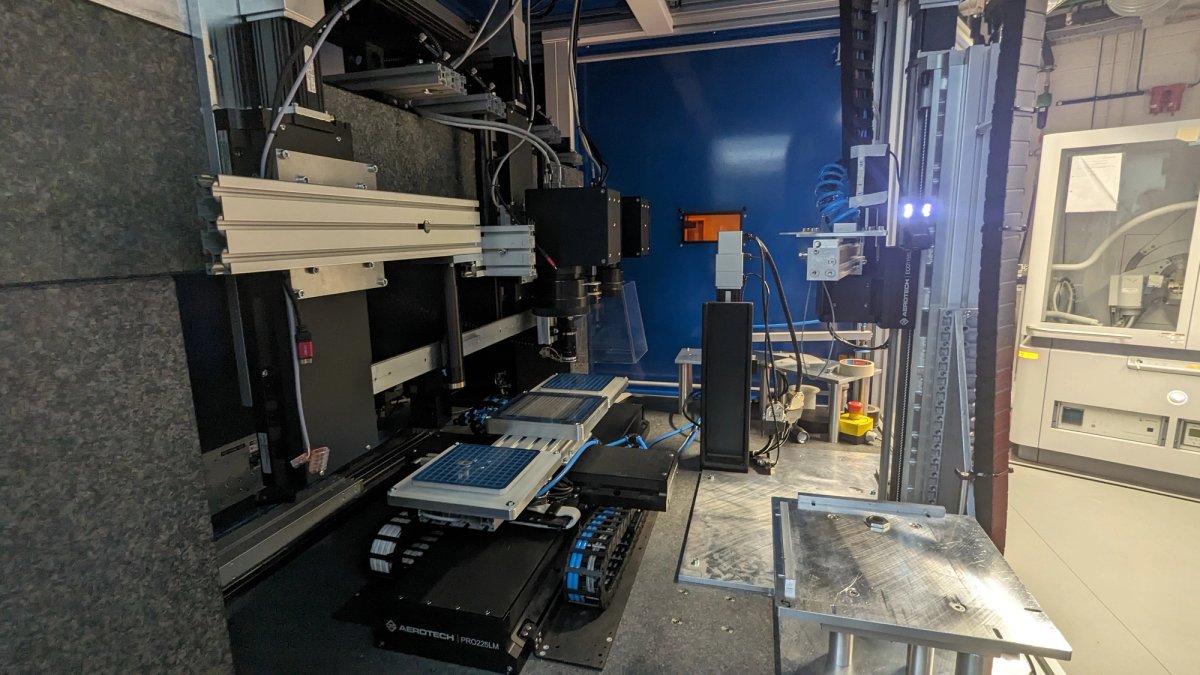
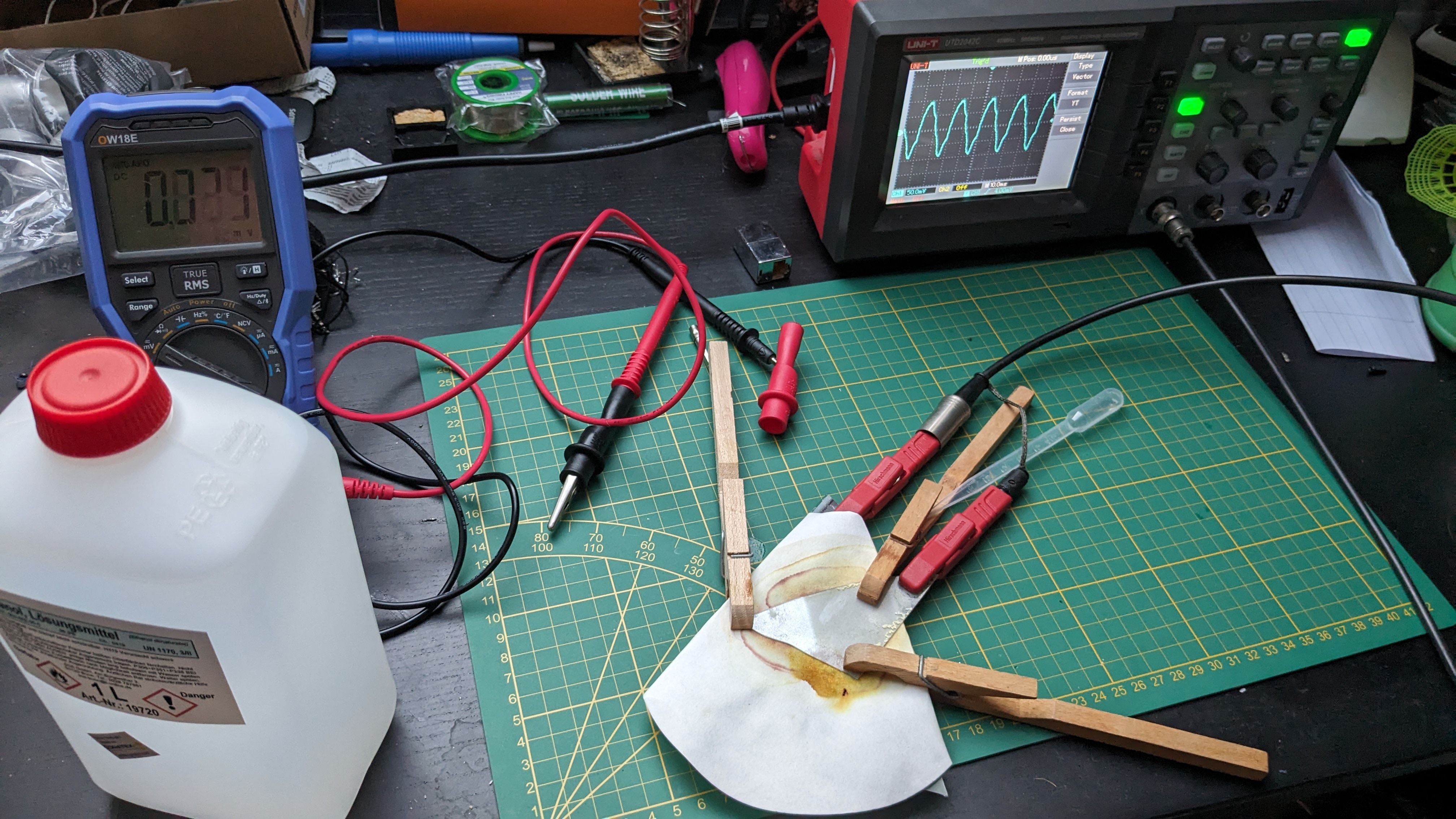
After a lot of experimentation in the school lab, getting in contact with a researcher at the Institute for Solar Energy Research in Hamelin ISFH, and at least twenty different prototypes, we managed to get a number of working cells with a relatively low but consistent voltage (between 90 and 300 mV), which is only about half of what would be expected for a singular silicon cell, albeit our current flow was very low.
The Competition
Our project was quite successful at the competition itself; we managed to get first place in chemistry as well as a special prize for renewable energy research at the local level, allowing us to go on to the Lower Saxony-wide state competition. While we didn't get a high enough placement there to go on to the Germany-wide round, we received another special prize for ideas with entrepreneurial potential, allowing us to participate in a special summer school in Magdeburg.
If you are interested in more of the project details, I have attached the project paper below, though it is only available in German.
Project Gallery